
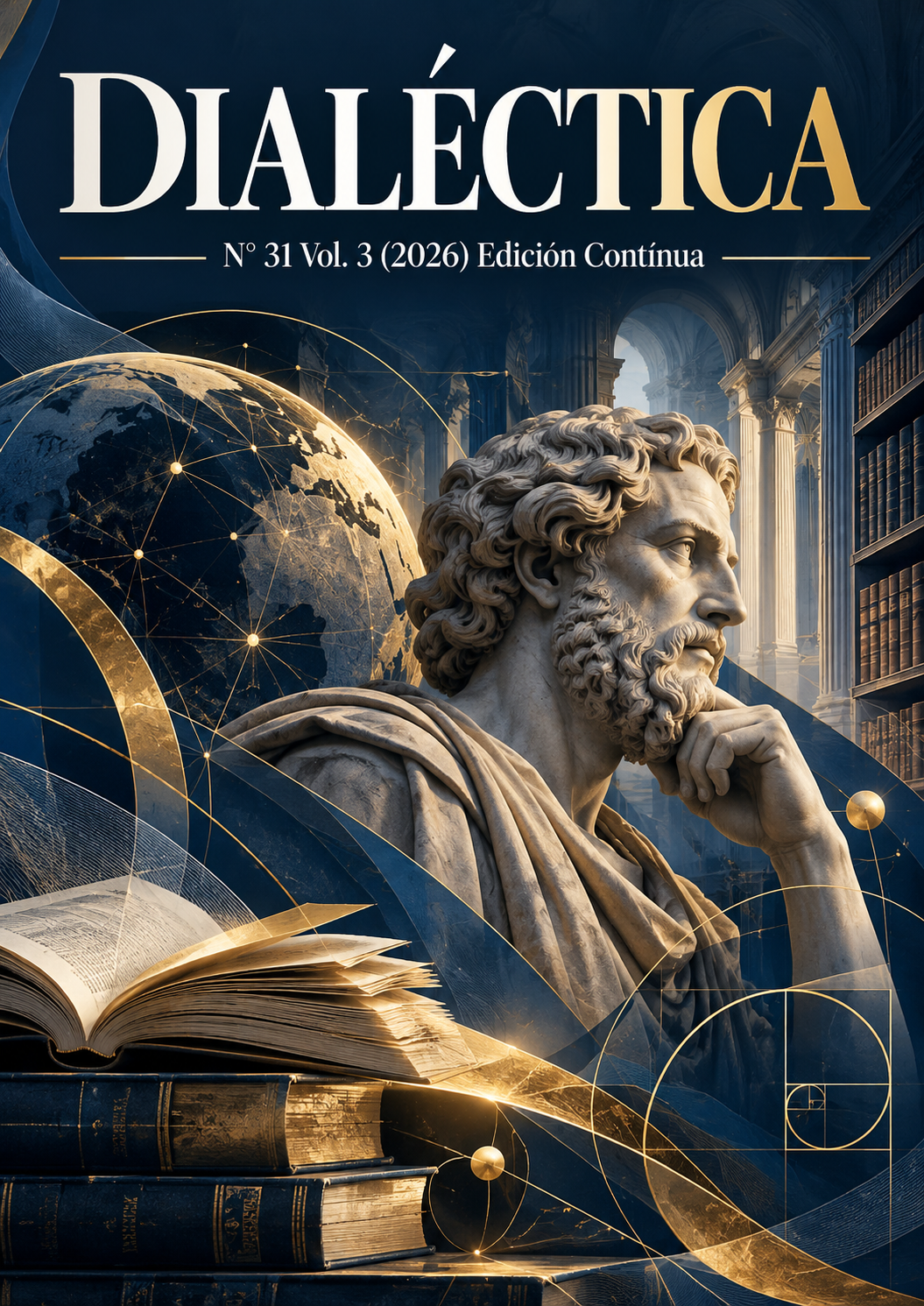
THE TEACHER AS A REFLECTIVE MEDIATOR: INTEGRATING DISCIPLINARY, HUMAN, AND CRITICAL ASPECTS INTO EXPERIENTIAL LEARNING IN HIGHER EDUCATION
DOI:
https://doi.org/10.56219/dialctica.v3i31.6576Keywords:
Pedagogical training, higher education, disciplinary knowledge, human sensitivity, reflective thinkingAbstract
This reflective essay argues that, in higher education, the instructor has shifted from the role of lecturer to that of facilitator who guides students in constructing meaningful learning based on their experiences. However, participation does not guarantee critical understanding. To prevent experiential learning from being limited to the fulfillment of curricular requirements, educators must guide reflection that encourages students to interpret their experiences, which requires adequate pedagogical training and optimal institutional conditions. This reflective essay analyzes this paradigm shift through four key areas: educational mediation in the classroom, the tensions between employability demands and available resources, the influence of teacher training on practical reflection, and curriculum design strategies. The findings show that strengthening teachers as reflective mediators requires greater inclusion of practical activities in the curriculum. Furthermore, it is essential to have coherent institutional policies, collaborative spaces, and authentic assessment systems that promote critical thinking. Only then will experiential learning evolve into a transformative tool for the holistic education of students.
Downloads
References
Bigg, J., & Tang, C. (2011). Teaching for quality learning at university: What the student does (4th ed ed.). Open University Press.
Boud, D., & Molloy, E. (2023). Feedback in higher and professional education: Understanding it and doing it well. Routledge. doi:https://doi.org/10.4324/9780203104231
CAST. (2018). Universal Design for Learning Guidelines version 2.2. (CAST, Editor) Obtenido de https://udlguidelines.cast.org/
Dewey, J. (1995). Experiencia y educación (L. Luzuriaga, Trad.). La Lectura. (Obra original publicada en 1938).
Freire, P. (1997). Pedagogía de la autonomía: Saberes necesarios para la práctica educativa. Siglo XXI editores.
Kolb, D. A. (1984). Experiential Learning: Experience as the Source of Learning and Development. Prentice-Hall.
Mezirock, J. (1991). Transformative dimensions of adult learning. Jossey-Bass.
Nussbaum, M. (2010). Sin fines de lucro: Por qué la democracia necesita de las humanidades. . Katz Editores.
Palmer, P. J. (1998). Good teaching cannot be reduced to technique; good teaching comes from the identity and integrity of the teache.
Schön, D. A. (1992). La formación de profesionales reflexivos: Hacia un nuevo diseño de la enseñanza y el aprendizaje en las profesiones. Paidós.
Shulman, L. S. (1987). Knowledge and teaching: Foundations of the new reform. Harvard Educational Review. , 57(1), 1-22. doi:https://doi.org/10.3102/0013189X057001001
Thomas, J. W. (2000). A review of research on project-based learning. Autodesk Foundation.
Downloads
Published
How to Cite
Issue
Section
License

This work is licensed under a Creative Commons Attribution-NonCommercial-ShareAlike 4.0 International License.
La revista Dialéctica conserva los derechos patrimoniales (copyright) de las obras publicadas, que favorece y permite la reutilización de los mismos bajo la licencia Creative Commons Atribución-NoComercial-CompartirIgual 4.0 , por lo cual se pueden copiar, usar, difundir, transmitir y exponer públicamente, siempre que se cite la autoría y fuente original de su publicación (revista, editorial, URL y DOI de la obra), no se usen para fines comerciales u onerosos y se mencione la existencia y especificaciones de esta licencia de uso. Si remezcla, transforma o crea a partir del material, debe distribuir su contribución bajo la misma licencia del original.














 +584121131459


